

by Nasaybah Hussain
While millions are tuning in to watch the Fifa World Cup, Pakistan’s role in football is beginning to change.
Although Pakistan has never qualified for the World Cup, it has long been part of the tournament’s story.
The footballs used in the World Cup are made in the north-eastern city of Sialkot, stitched together by Pakistani hands. For decades, this has placed the country at the heart of the global game.
But, at the same time, its own national team has remained largely absent from football’s biggest conversations. Now, after winning its first international tournament in 74 years, Pakistan is beginning to imagine a future in which it is known for producing international footballers as well as the balls they kick.
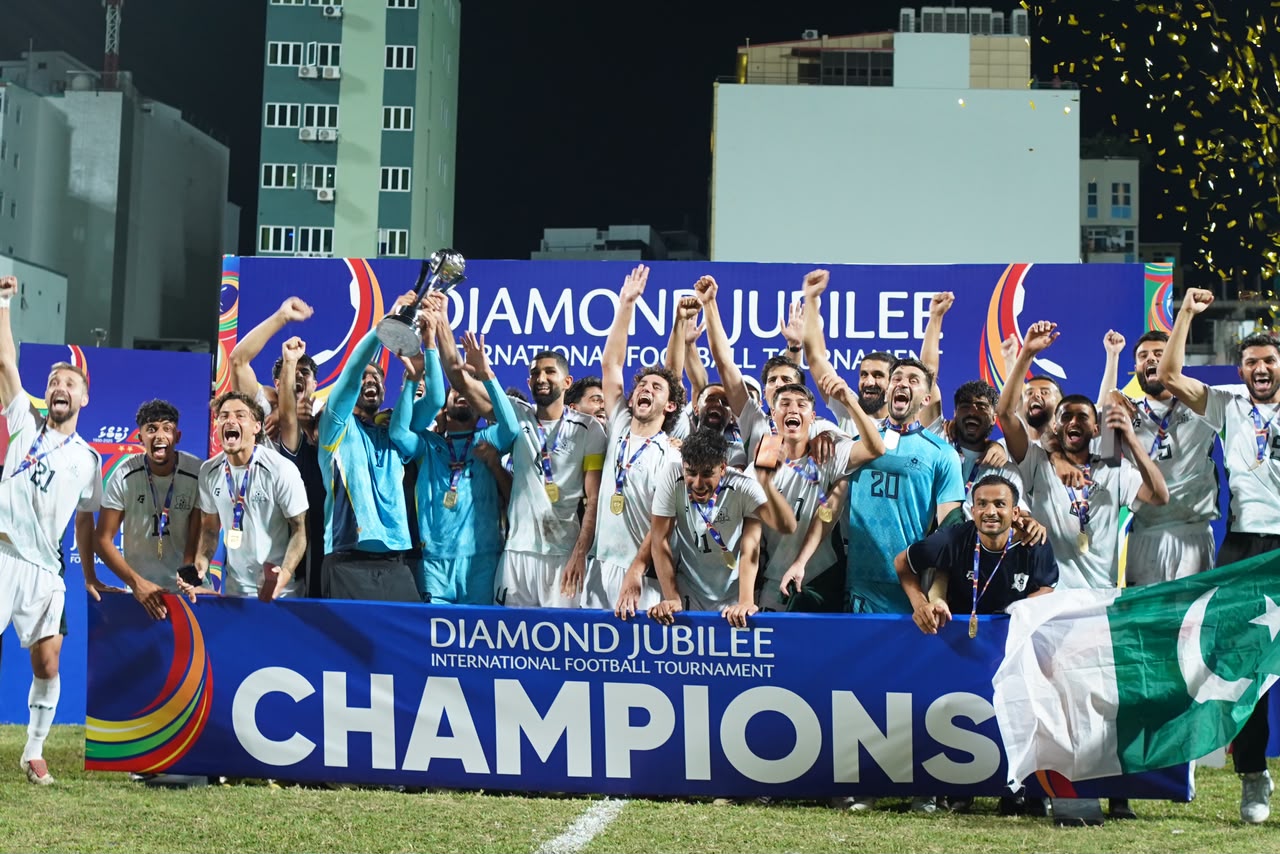
The last time the Pakistan men’s football team had won an international tournament was in 1952. But this year, that changed. In June, Pakistan won the four-nation Diamond Jubilee International Football Tournament, defeating Afghanistan 2–0 in the final.
The tournament was organised to mark the 75th anniversary of the Football Association of Maldives, and victory lifted Pakistan up three spots in the official Fifa rankings.
Years of disruption
The victory comes as the country rebuilds its footballing identity after years of disruption. Pakistan has been suspended by Fifa three times in the past nine years over governance disputes, including what Fifa described as a “hostile takeover” of the Pakistan Football Federation in 2021.
In 2022, former England footballer Michael Owen visited Pakistan as an ambassador for the proposed Pakistan Football League, which was scheduled to launch later that year. During his visit, he promoted plans for Pakistan’s first international-standard football stadium in Karachi, to help revitalise the sport.
However, the launch was delayed, mainly due to the country’s political instability, with Owen returning again in 2024 to relaunch the project and continue efforts to bring a professional football league to Pakistan.
Landmark moment
The Diamond Jubilee win marked a landmark moment. At a time when millions are watching the World Cup, this victory offered a glimpse of a different future: one where Pakistan is known not only for the footballs made in Sialkot, but also for the footballers it produces.

Behind that new chapter is a coach tasked with turning belief into progress. For Nolberto Solano, pictured above, the victory is just the starting point.
“That great result made everyone believe, you know, to believe in your own players,” the former Newcastle United and Peru winger said.
For Solano, Pakistan’s future lies in creating opportunities at home while also connecting with talented players across the diaspora.
UK roots
That ambition is reflected in the players themselves, with Pakistan’s recent success shaped by a new generation of footballers with roots in the UK.
“They are very good professional boys. They are really, really proud to play for Pakistan… they bring their experience, they bring their strong mentality to get good results… they are very good, very good examples,” Solano said.

Eighteen-year-old Umar Nawaz, pictured above, was one of Pakistan’s standout players, scoring twice during the tournament, including one against Afghanistan that sent them into the final.
Born in Pakistan and raised in England, the young forward began his footballing journey through Bournville Academy, before joining Wolverhampton Wanderers youth setup and later Wrexham’s academy.
Tragedy
But Umar’s journey to the international stage began with tragedy. He was just seven when his older brother Harris was killed in the 2014 Peshawar school attack, one of Pakistan’s deadliest terrorist incidents.
Pakistan Taliban militants stormed an army-run school, killing 141 people, including 132 children.
Another of his brothers was injured, and the family moved to the UK so he could receive treatment and they could rebuild their lives.
For Umar, football keeps alive happier memories. He still recalls playing in the garden with Harris back in Pakistan, laughing as he teased his older brother.
Now, after breaking into Pakistan’s national team at just 18, wearing the Pakistan shirt brings his family pride and Umar says representing his country is his “biggest achievement so far”.

Umar was not the only player with roots in the UK to play a key role in Pakistan’s football revival. Birmingham-born brothers Adil and Rahis Nabi, pictured above, were also part of the squad that lifted the Diamond Jubilee trophy, having developed through the West Bromwich Albion academy, with Rahis also representing England at youth level.
The tournament also marked Adil’s senior international debut for Pakistan, with the brothers bringing their experience of the British football system to Pakistan’s national team.
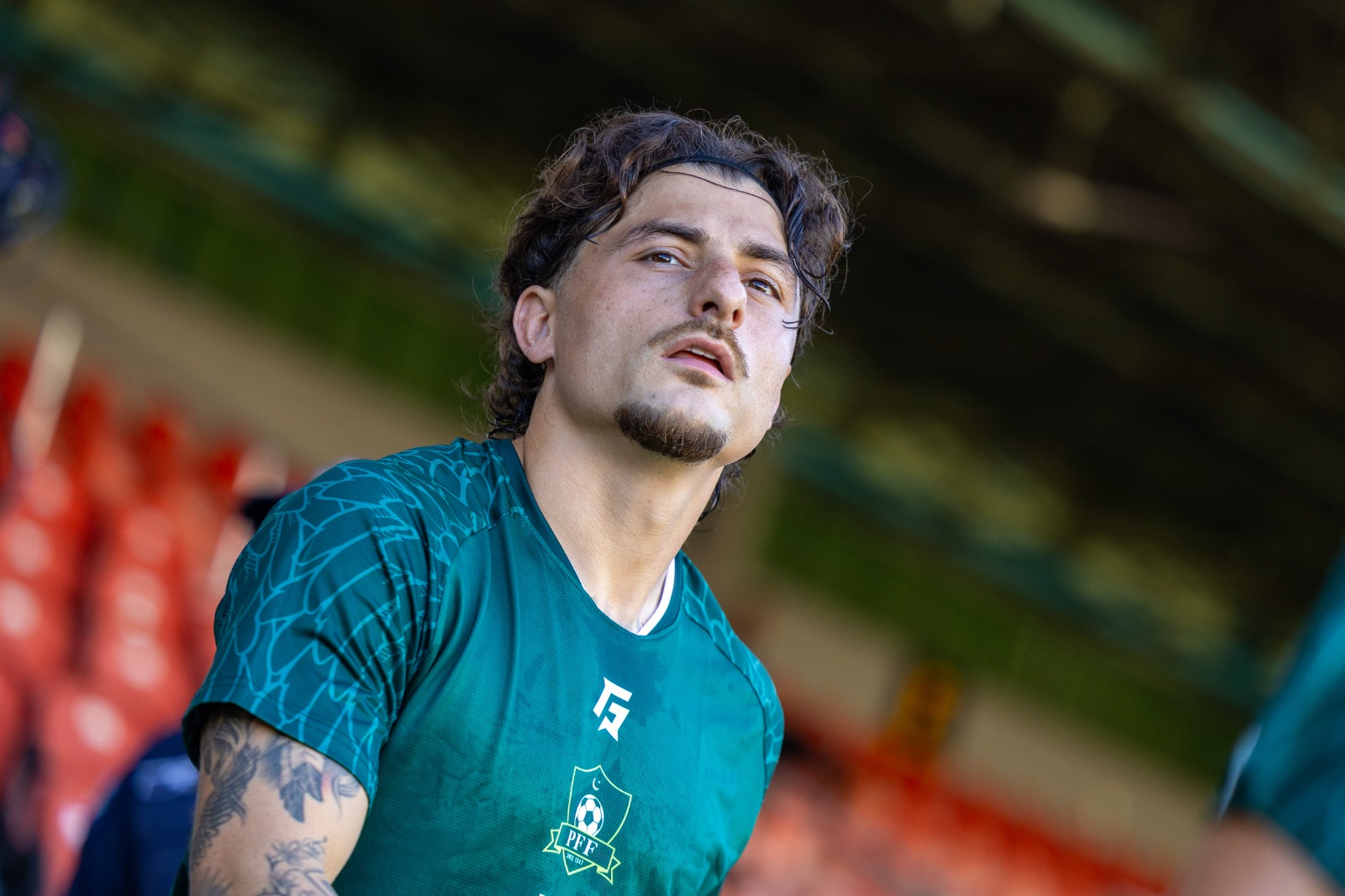
The influence of the Pakistani diaspora was also seen through Otis Khan, pictured above. Born in England, the midfielder built his career in English football, playing for clubs including Sheffield United, Yeovil Town and Grimsby Town.
He qualified to play for Pakistan through his paternal grandfather, later making his international debut for the national team. He now plays for Altrincham FC.
Beyond the pitch
As these players help reshape Pakistan’s football story, the impact goes beyond the pitch. While the World Cup captured the imagination of millions, Pakistan’s victory offers something equally significant at home: belief.
A tournament victory alone will not transform Pakistani football overnight. But it provides something every developing football nation needs: momentum. It offers young players a team they can believe in, role models whose journeys reflect their own, and proof that representing Pakistan on the international stage is no longer an impossible ambition.
For decades, Pakistan’s football story has been told through the balls stitched in Sialkot and kicked in World Cup stadiums.
‘Keep belief’
When asked whether Pakistan would be in the World Cup one day, Nolberto Solano said: “Keep belief…nobody knows about the future. But I believe in game by game.”
This victory suggests the next chapter may be different.
Somewhere, whether on the streets of Lyari, in a park in Birmingham or watching the World Cup at home, another young footballer has begun to imagine that one day they won’t just watch the world’s biggest tournament, they might play in it.